

Why Has My Jack Russell Become Aggressive

This post contains affiliate links. This means I will make a commission at no extra cost to you should you click through and make a purchase. Read the full disclosure here.A Jack Russell that suddenly growls, snaps or bites can leave its owner feeling frightened, confused or even betrayed. However, aggressive behaviour does not mean your dog has suddenly become “bad” or is trying to dominate you.
Aggression is normally a response to something the dog finds threatening, painful, frustrating or highly valuable. It may be used to create distance, protect a resource or prevent an unwanted interaction.
A noticeable change in behaviour can also be an early sign of pain or illness. Therefore, if your normally friendly Jack Russell has unexpectedly become aggressive, your first step should be to protect everyone from injury and arrange a veterinary examination.
Quick answer: Your Jack Russell may have become aggressive because of pain, illness, fear, anxiety, resource guarding, frustration, ageing, environmental changes or learned behaviour. Sudden or unexplained aggression should always be investigated by a veterinarian before it is treated only as a training problem.
What Does Aggression Look Like in a Jack Russell?
Aggression includes more than biting. Dogs normally communicate discomfort through body language before escalating to a snap or bite.
Early signs that your Jack Russell is uncomfortable may include:
- turning its head away;
- avoiding eye contact;
- licking its lips when no food is present;
- yawning outside a sleepy context;
- closing its mouth suddenly;
- lowering its head or body;
- flattening its ears;
- showing the whites of its eyes;
- lifting one front paw;
- attempting to leave;
- hiding;
- becoming unusually still; or
- refusing treats.
More obvious warnings include:
- stiffening;
- staring;
- raising the hair along the back;
- growling;
- showing teeth;
- snarling;
- barking aggressively;
- lunging;
- snapping; or
- biting.
A wagging tail does not always mean that a dog is friendly. A high, fast or stiff wag can occur when a dog is highly aroused or conflicted.
The RSPCA’s guidance on canine aggression explains that dogs frequently use subtle signals first. If those signals are repeatedly ignored or punished, some dogs may eventually proceed more quickly to snapping or biting.
Is Jack Russell Aggression Normal?
Jack Russells are active, bold and alert terriers. They may be persistent, easily excited by movement and inclined to chase. These characteristics can make some behavioural problems more noticeable, but aggression should not simply be dismissed as “typical Jack Russell behaviour.”
Any dog can behave aggressively when it feels sufficiently threatened, frightened or uncomfortable.
Genetics may influence characteristics such as confidence, sensitivity and impulsivity, but behaviour is also shaped by:
- health;
- pain;
- early development;
- socialisation;
- previous experiences;
- training;
- environment;
- learning;
- stress; and
- the immediate situation.
The breed may influence behaviour, but it does not provide the complete explanation.
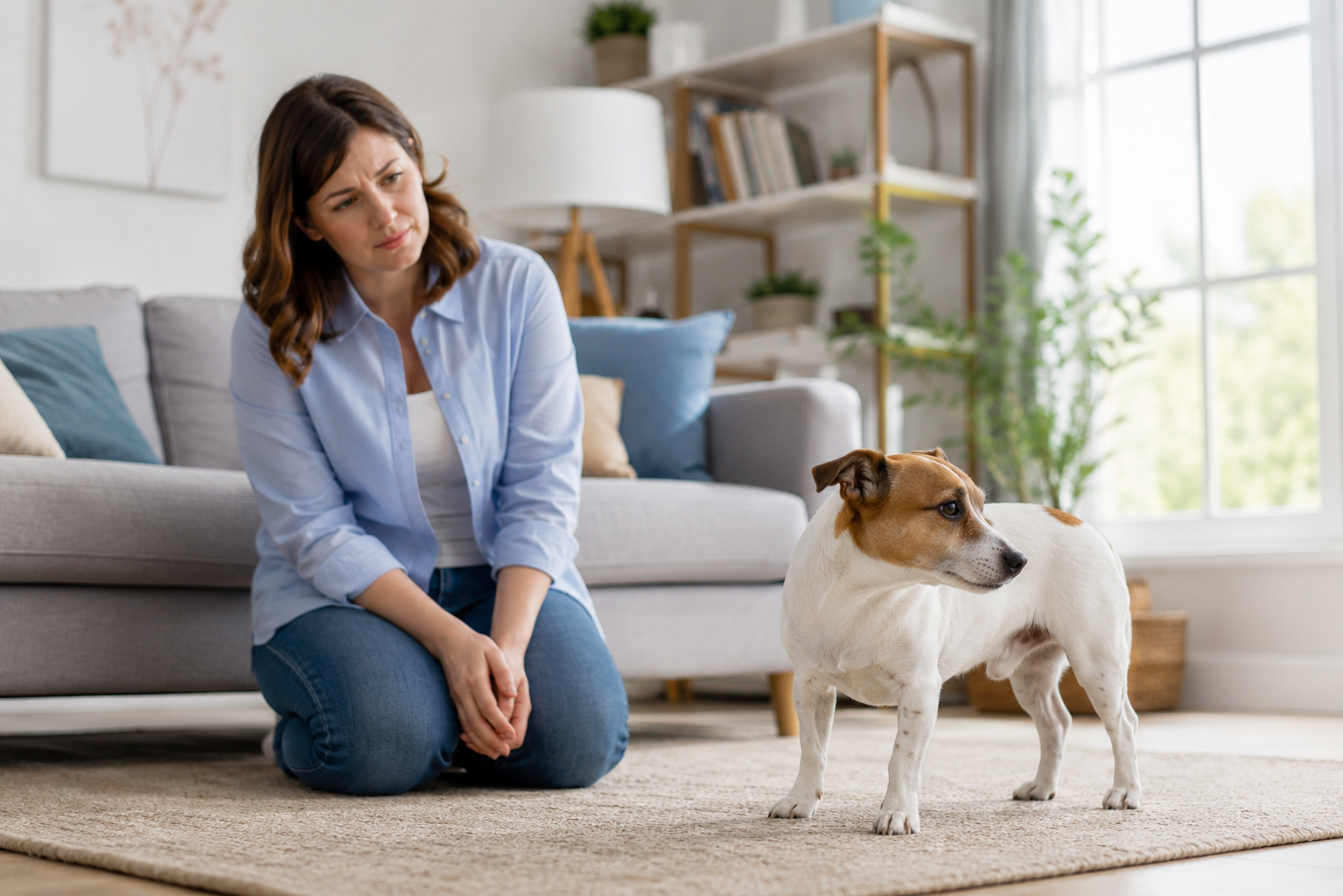
1. Pain Is a Common Cause of Sudden Aggression
Pain should be one of the first possibilities considered when a previously tolerant dog begins growling, snapping or avoiding touch.
A dog in pain may react aggressively when:
- lifted;
- moved from its bed;
- touched in a painful area;
- fitted with a harness;
- groomed;
- approached while resting;
- helped into a vehicle; or
- disturbed by another pet or child.
Possible sources of pain include:
- dental disease;
- ear infection;
- arthritis;
- back or neck pain;
- muscle or joint injury;
- eye pain;
- skin inflammation;
- abdominal discomfort;
- urinary problems;
- damaged nails; or
- an unseen wound.
The dog may not limp or cry. Behavioural change can be the most noticeable sign.
The Merck Veterinary Manual notes that pain aggression may occur when a dog is touched, moved or anticipates painful handling. It also explains that neurological, hormonal and internal medical conditions can contribute to aggressive behaviour.
Signs that pain may be involved
Look for accompanying changes such as:
- reluctance to jump or use stairs;
- stiffness after resting;
- reduced appetite;
- sleeping more;
- restlessness at night;
- repeated licking of one area;
- sudden sensitivity to touch;
- hiding;
- panting without exercise or heat;
- changes in posture;
- unusual toileting;
- reduced interest in play; or
- difficulty getting comfortable.
Do not test for pain by repeatedly touching the area until the dog reacts. This can cause unnecessary distress and put you at risk of being bitten.
Arrange a veterinary examination instead.
2. Illness or Neurological Changes
Medical conditions can affect a dog’s tolerance, awareness or ability to respond normally.
Possible medical contributors include:
- neurological disease;
- seizures;
- sensory loss;
- organ dysfunction;
- hormonal disorders;
- cognitive decline;
- infection;
- medication side effects; or
- conditions affecting sleep and comfort.
A dog that cannot see or hear well may startle when approached. A dog experiencing confusion may react defensively because it does not immediately recognise a person or understand what is happening.
Seek prompt veterinary attention if aggression occurs with:
- loss of balance;
- circling;
- staring episodes;
- seizures;
- weakness;
- collapse;
- sudden blindness;
- confusion;
- major sleep changes;
- head pressing; or
- a noticeably altered level of awareness.
3. Fear and Anxiety
Many aggressive responses are attempts to make a frightening person, animal or situation move away.
A Jack Russell may be frightened by:
- unfamiliar people;
- children’s sudden movements;
- other dogs;
- veterinary handling;
- nail trimming;
- loud sounds;
- being cornered;
- having a collar grabbed;
- punishment;
- previous frightening experiences; or
- being forced into close contact.
A fearful dog may initially hide, freeze or attempt to escape. If escape is impossible or previous warnings have not worked, the dog may growl, snap or bite.
Fear is not disobedience
Punishing a frightened dog can confirm that the situation is dangerous. It may increase anxiety and make future aggression more severe.
Instead:
- increase the distance from the trigger;
- allow the dog to leave;
- use barriers where necessary;
- avoid forced greetings;
- reward calm behaviour at a safe distance; and
- seek professional help before attempting closer exposure.
4. Resource Guarding
Resource guarding occurs when a dog tries to retain something it values. It may guard:
- food;
- treats;
- toys;
- chews;
- stolen objects;
- a bed;
- a favourite resting place;
- a person; or
- access to a doorway or room.
Signs can include eating faster, freezing, covering the item, staring, growling, snapping or biting when someone approaches.
Do not repeatedly take food away
Some owners are advised to remove a puppy’s bowl to “show who is in charge.” This can teach the puppy that approaching hands cause valuable food to disappear.
Safer initial management includes:
- feeding the dog in a quiet area;
- keeping children away while it eats;
- avoiding high-value chews around other pets;
- exchanging stolen objects for better rewards;
- calling the dog away instead of reaching towards it; and
- preventing access to items it commonly steals.
Resource guarding can become dangerous. A qualified behaviour professional should design the treatment plan, especially when children live in the home or the dog has already bitten.
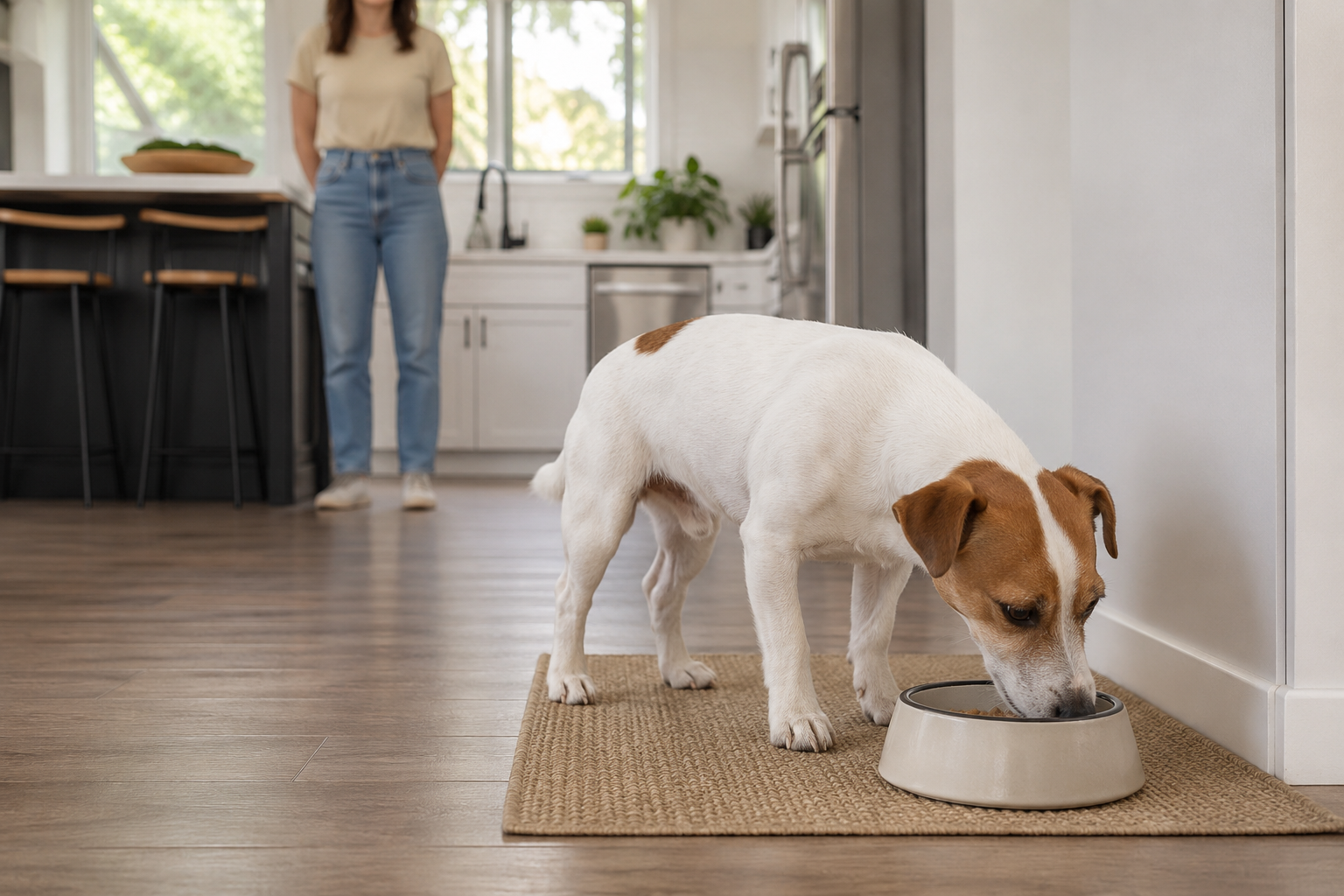
5. Frustration and Overarousal
Jack Russells are energetic dogs that can become highly excited by movement, play, visitors or other animals.
Frustration may develop when the dog:
- sees another dog but cannot reach it;
- is restrained by a lead;
- waits impatiently at a door;
- becomes overexcited during play;
- receives too little mental stimulation;
- cannot access something it wants; or
- has not learned how to settle.
A frustrated dog may bark, spin, grab the lead, jump, nip or redirect aggression towards a nearby person or animal.
Redirected aggression
Redirected aggression can happen when a dog is highly aroused by one trigger but turns towards something else within reach.
For example, two dogs barking at an animal through a fence may suddenly fight each other. A dog being restrained from another dog may turn and bite the person holding its collar.
Avoid reaching between fighting or highly aroused dogs with your hands. Create distance using barriers and obtain professional guidance.
6. Territorial or Protective Behaviour
A Jack Russell may bark or lunge at people near:
- the front door;
- a window;
- the garden fence;
- the car;
- its owner; or
- its resting area.
Not all alert barking is aggression. However, repeated barking, charging and lunging can become strongly rehearsed.
Helpful management may include:
- blocking the dog’s view through windows;
- preventing unsupervised fence running;
- placing the dog behind a secure gate before opening the door;
- rewarding it for moving to a mat;
- asking visitors to ignore it initially; and
- avoiding forced interaction.
A dog that appears “protective” may actually be frightened or uncertain. A behaviour assessment can help determine the motivation.
7. Changes in the Home or Routine
Dogs can become stressed when their environment changes.
Possible triggers include:
- moving house;
- a new baby;
- a new partner;
- visitors;
- another pet;
- changes in work schedules;
- reduced exercise;
- family conflict;
- building noise;
- boarding;
- the loss of another animal; or
- repeated disruptions to sleep.
Stress can reduce the dog’s ability to cope with situations that it previously tolerated.
Aggression may appear to be caused by one small event when the dog has actually experienced several stressors close together.
8. Lack of Appropriate Socialisation
A dog that had limited positive experiences during early development may be fearful of unfamiliar people, dogs, surfaces, sounds or handling.
Socialisation does not mean forcing a puppy to interact with everyone. It means providing safe, positive and controlled exposure while allowing the puppy to move away.
Adult dogs can still learn, but progress should occur gradually. Flooding a frightened dog with intense exposure can make the fear worse.
9. Previous Learning
Aggression can become a learned response because it often works.
If a dog growls and a person moves away, the dog learns that growling creates distance. This does not mean the dog is manipulative. It means the behaviour successfully helped it feel safer.
The solution is not to punish the warning. The trigger and the dog’s emotional response must be addressed safely.
10. Ageing and Cognitive Decline
An older Jack Russell may become less tolerant because of:
- arthritis;
- dental pain;
- reduced sight;
- reduced hearing;
- disturbed sleep;
- anxiety;
- neurological illness; or
- canine cognitive dysfunction.
A senior dog may startle more easily or become confused when awakened. It may also guard its resting place because getting up is painful.
Signs that deserve veterinary investigation include:
- getting stuck behind furniture;
- staring at walls;
- becoming restless at night;
- forgetting familiar routines;
- toileting indoors;
- increased anxiety;
- reduced interaction;
- unexplained vocalisation; or
- appearing not to recognise familiar people temporarily.
Age-related behavioural change should not automatically be accepted as “just getting old.” Some causes can be treated or managed.
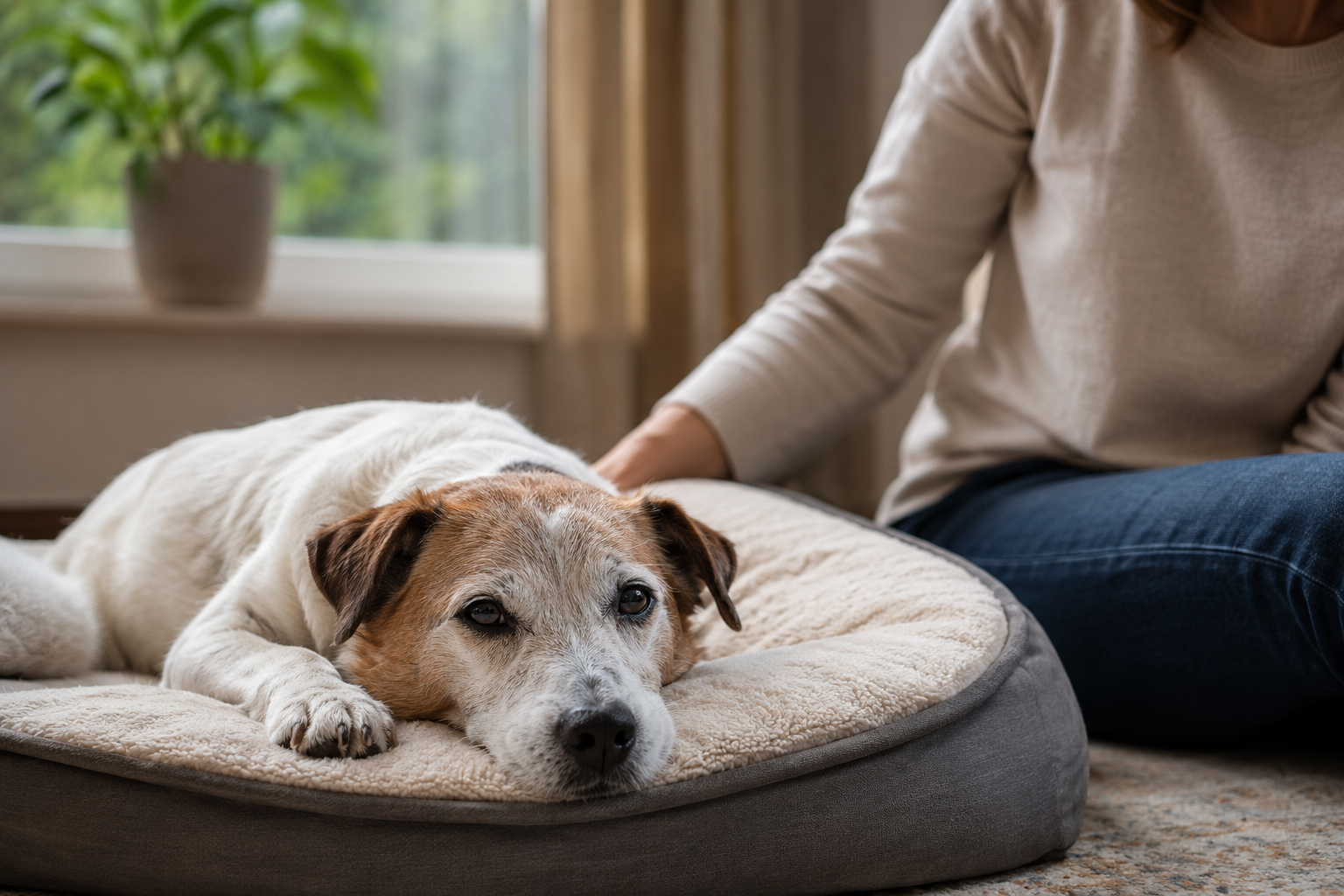
Why Is My Jack Russell Aggressive Towards Me?
Aggression towards an owner commonly occurs in a specific context rather than because the dog has stopped loving the person.
Ask whether it happens when you:
- touch a particular body part;
- lift the dog;
- move it from furniture;
- approach its food;
- take away a toy;
- put on its harness;
- trim its nails;
- wake it;
- hug it;
- restrain it;
- interrupt play; or
- raise your voice.
These details help identify the possible trigger.
Do not deliberately recreate the situation to see whether the dog reacts again. Prevent another incident and record what happened.
Why Is My Jack Russell Aggressive Towards Other Dogs?
Possible reasons include:
- fear;
- frustration on the lead;
- poor social skills;
- previous attacks;
- guarding;
- pain;
- competition over resources;
- sensitivity to particular dogs; or
- high arousal.
A dog that barks and lunges on the lead is not necessarily trying to attack. It may be frightened, frustrated or desperate to increase distance.
Avoid crowded dog parks and close greetings while seeking help. Walking farther away from other dogs is safer than forcing your Jack Russell to “get used to them.”
Why Is My Jack Russell Aggressive Towards Children?
Children may move unpredictably, make high-pitched sounds, approach resting dogs or attempt to take toys. Some dogs find these interactions frightening or overwhelming.
If your dog has growled, snapped or shown discomfort around a child:
- separate them immediately;
- use secure doors or gates;
- do not depend only on adult verbal supervision;
- prevent the child from approaching the dog’s bed or food;
- arrange a veterinary examination; and
- obtain qualified behaviour assistance.
Never punish the dog in front of the child or instruct the child to give it treats by hand as a quick solution.
A physical barrier provides greater safety than expecting a child or stressed dog to remember rules consistently.
What Should I Do If My Jack Russell Growls?
A growl is important information. It tells you that the dog is uncomfortable and may escalate if the situation continues.
When your Jack Russell growls:
- Stop what you are doing.
- Avoid leaning over or reaching towards the dog.
- Remain calm.
- Give it space.
- Move children and other animals away safely.
- Identify what was happening immediately before the growl.
- Prevent the situation from recurring.
- Arrange professional help if the behaviour is new, repeated or severe.
Do not stare at the dog, grab its collar, pin it down or attempt to “show dominance.”
Never punish a growl
Punishing growling may suppress the warning without resolving the fear, pain or conflict underneath it. The dog may learn that subtle warnings are unsafe and progress more quickly to biting.
The goal is not merely to stop the sound. It is to understand why the dog needs to growl.
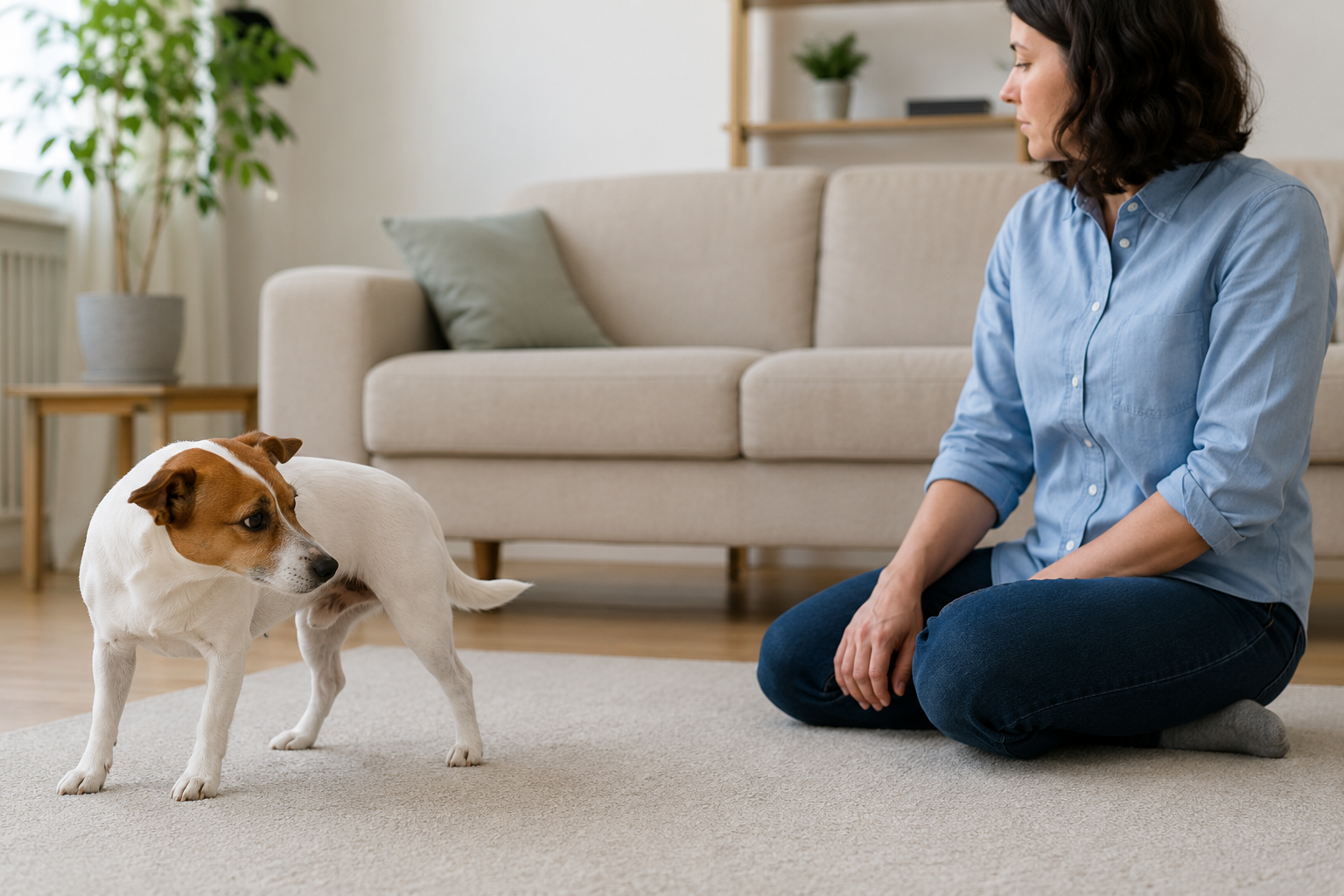
What to Do If Your Jack Russell Bites Someone
First, secure the dog without creating another confrontation. Use a separate room, gate or barrier if it can be done safely.
The injured person should:
- wash the wound thoroughly;
- control bleeding with clean pressure;
- seek medical advice, particularly for punctures;
- obtain urgent care for severe bleeding, facial injuries, hand injuries or deep wounds;
- confirm whether tetanus protection is current; and
- follow local requirements concerning dog bites and rabies risk.
Do not focus immediately on punishing the dog. Record:
- where the incident happened;
- who was present;
- what occurred immediately before it;
- whether the dog was resting, eating or in pain;
- what body-language warnings appeared;
- where the bite landed;
- whether it broke the skin;
- how many bites occurred; and
- how the incident ended.
This information will help the veterinarian and behaviour professional assess risk.
A dog that has bitten should not be placed back into the same situation without a safety and treatment plan.
Should I Take My Jack Russell to the Vet?
Yes—particularly when the aggression is new, unexplained or worsening.
Contact your veterinarian promptly if:
- the behaviour started suddenly;
- your dog is normally friendly;
- it reacts when touched or moved;
- it is eating less;
- its movement has changed;
- it appears confused;
- it is a senior dog;
- aggression began after an injury or illness;
- it recently started medication;
- it has snapped at a child;
- it has bitten and broken the skin; or
- the behaviour is becoming more frequent.
Tell the clinic about the aggression before arriving. Staff may arrange a quieter appointment or recommend specific safety precautions.
Do not conceal the bite risk. Accurate information helps the veterinary team prepare safely.
What Will the Veterinarian Check?
The examination may include an assessment of:
- teeth and mouth;
- ears;
- eyes;
- skin;
- joints and spine;
- abdomen;
- nervous system;
- body condition;
- medication history;
- sensory function; and
- general health.
The veterinarian may recommend blood tests, urine testing, imaging or other investigations depending on the dog’s symptoms and age.
If a medical cause is treated but aggression continues, behavioural treatment may still be needed because the dog may have learned to anticipate pain or danger.
Managing Aggression Safely at Home
Management prevents additional incidents while the cause is investigated.
Depending on the situation, management may involve:
- separating the dog from children;
- using gates and closed doors;
- feeding pets separately;
- removing disputed toys;
- avoiding crowded walking routes;
- walking during quieter hours;
- blocking window access;
- using a secure harness and lead;
- giving the dog an undisturbed sleeping area;
- avoiding painful handling; and
- keeping visitors away from the dog.
Management is not failure. It protects people and prevents the dog from repeatedly practising aggressive behaviour.
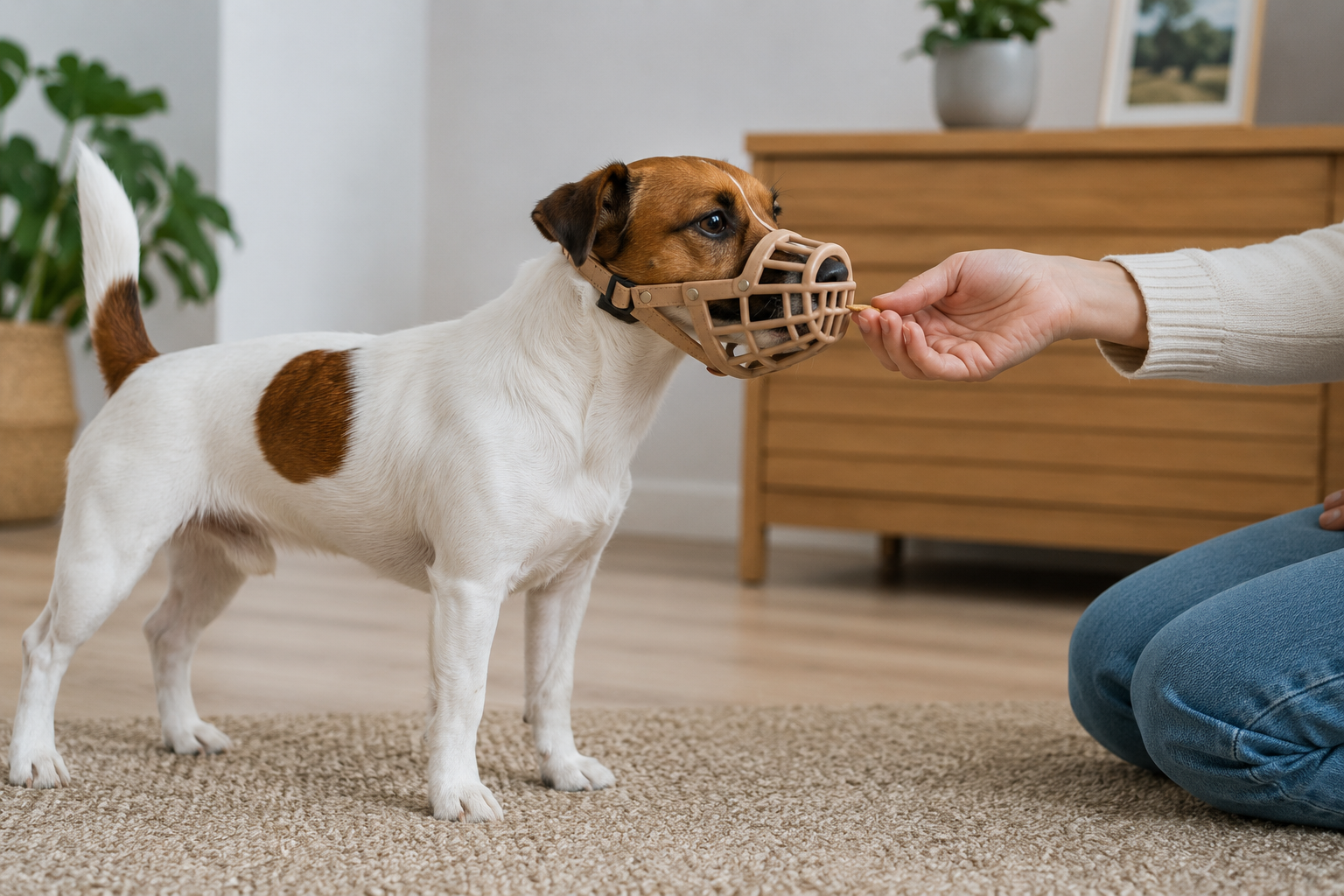
Consider basket-muzzle training
A properly fitted basket muzzle can provide an additional layer of safety. It should allow the dog to:
- pant;
- drink;
- accept treats; and
- move its jaw comfortably.
The muzzle must be introduced gradually with rewards. It should never be used to force a dog into situations it cannot cope with.
A fabric muzzle that holds the mouth closed is generally intended only for brief, supervised procedures—not walks or extended wear.
A muzzle does not replace distance, barriers, training or professional support.
How Aggression Is Treated
Treatment depends on the cause, context and risk level.
A responsible plan may include:
- treatment for pain or illness;
- preventing exposure to known triggers;
- teaching alternative behaviours;
- gradual desensitisation;
- changing the dog’s emotional response through counterconditioning;
- improving rest and routine;
- appropriate exercise and enrichment;
- reducing frustration;
- carefully controlled training; and
- behavioural medication when prescribed by a veterinarian.
Medication is not used simply to sedate a dog. In suitable cases, it can reduce anxiety enough for the dog to learn and cope more effectively.
Do not give calming supplements, human medication or leftover veterinary medicine without professional advice.
Use Reward-Based Training
The American Veterinary Society of Animal Behavior recommends reward-based methods for all dog training, including behaviour modification. Read the AVSAB position statement.
Avoid trainers who recommend:
- alpha rolls;
- pinning the dog down;
- hitting;
- shouting;
- lead jerks;
- shock collars;
- prong collars;
- deliberately provoking a reaction;
- flooding the dog with its trigger; or
- withholding basic needs to establish control.
Pain and intimidation can increase fear and suppress warning signals without making the dog feel safe.
Finding the Right Professional
Begin with your veterinarian. If medical causes are ruled out or treated, ask for referral to an appropriately qualified clinical animal behaviourist or veterinary behaviourist.
A suitable professional should:
- work with your veterinarian;
- use evidence-based, humane methods;
- request a detailed behavioural history;
- assess safety risks;
- explain the plan clearly;
- avoid guarantees; and
- adjust treatment according to the dog’s response.
Anyone can describe themselves as a trainer or behaviour expert in many countries, so check qualifications and methods carefully.
Keep an Aggression Diary
Record each incident using a simple table:
| What to record | Example |
|---|---|
| Date and time | Monday, 18:30 |
| Location | Living room sofa |
| Person or animal present | Adult owner |
| What happened before | Owner reached to move dog |
| Dog’s early signals | Turned head, stiffened |
| Behaviour | Growled and snapped |
| Contact | No contact |
| What happened afterwards | Owner moved away |
| Other changes | Dog reluctant to climb stairs |
Patterns can help the veterinary and behaviour team identify triggers.
Do not deliberately create incidents to complete the diary.
Can Aggression Be Cured?
Some aggression can improve substantially when the cause is identified and an appropriate plan is followed. Pain-related behaviour may improve when the pain is treated. Fear-based behaviour may become more manageable with careful behaviour modification.
However, no responsible professional can guarantee that a dog will never growl or bite again.
The likely outcome depends on:
- the underlying cause;
- bite history;
- severity;
- predictability;
- number of triggers;
- people at risk;
- owner’s ability to manage the environment;
- dog’s health; and
- access to qualified support.
The goal is to reduce risk, improve the dog’s emotional wellbeing and create safe, realistic routines.
When Is Aggression an Emergency?
Contact a veterinarian urgently if aggression occurs alongside:
- seizures;
- collapse;
- loss of balance;
- sudden blindness;
- severe pain;
- breathing difficulty;
- poisoning;
- head injury;
- extreme confusion;
- inability to walk;
- repeated unprovoked episodes; or
- a dramatic change in awareness.
If there is an immediate risk of serious injury, separate people and animals using secure barriers and contact your veterinarian or appropriate local emergency service for guidance.
Do not attempt to physically overpower a highly aroused dog.
Frequently Asked Questions
Why has my Jack Russell suddenly started growling at me?
Sudden growling can result from pain, illness, fear, resource guarding or discomfort with a particular interaction. Stop the triggering interaction and arrange a veterinary examination, especially if the behaviour is new.
Why does my Jack Russell growl when I move it?
The dog may be guarding its resting place, disliking forced handling or experiencing pain when it moves. Call it away using a reward instead of pushing or lifting it, and ask your veterinarian to assess for pain.
Why is my older Jack Russell becoming aggressive?
Senior dogs may develop arthritis, dental disease, sensory loss, sleep disturbance, anxiety or cognitive decline. A veterinary examination is necessary because several age-related conditions can change behaviour.
Why is my Jack Russell aggressive only at night?
Pain, fatigue, reduced vision, disturbed sleep, fear in low light or cognitive changes may contribute. Keep a record of the circumstances and discuss the pattern with your veterinarian.
Should I punish my Jack Russell for biting?
No. Punishment can increase fear, provoke further aggression and suppress warning signals. Secure the dog safely, arrange medical care for the injured person and obtain veterinary and behaviour assistance.
Will neutering stop aggression?
Neutering is not a universal treatment for aggression. Behaviour may be influenced by fear, pain, learning, guarding and many other factors that neutering will not resolve. Discuss the dog’s complete health and behavioural history with your veterinarian.
Is my Jack Russell trying to dominate me?
Aggressive behaviour is more usefully investigated in terms of pain, fear, guarding, frustration, learning and the immediate context. Trying to establish dominance through force can make the situation more dangerous.
Can exercise stop aggression?
Appropriate exercise can support wellbeing and reduce boredom, but it does not treat pain, fear, guarding or established aggression. Highly arousing exercise may worsen behaviour in some dogs if it is not balanced with sniffing, training and rest.
Why does my Jack Russell attack without warning?
Some warning signs are very subtle or brief. A dog may also have learned that growling is punished or ineffective. Medical and neurological causes must be considered when behaviour appears sudden or unpredictable.
Should an aggressive Jack Russell be rehomed?
Rehoming is not automatically safe or appropriate. The decision depends on the cause, bite history, household risks and availability of a genuinely suitable home. Discuss the situation honestly with your veterinarian, qualified behaviour professional and reputable rescue organisation.
Final Thoughts
When a Jack Russell becomes aggressive, focus first on safety and cause, not blame.
Aggression may reflect pain, illness, fear, anxiety, guarding, frustration, ageing or previous learning. Punishment may silence a warning without addressing the problem underneath it.
Your next steps should be:
- Prevent another incident.
- Keep children and vulnerable people safely separated.
- Record the circumstances surrounding the behaviour.
- Arrange a veterinary examination.
- Seek a qualified behaviour professional when recommended.
- Use reward-based methods and realistic management.
Early intervention gives you the best chance of protecting everyone while improving your Jack Russell’s wellbeing.





![Weaning Jack Russell Terrier Puppies [Tips for how & when to do it successfully]](https://jackrusselterrier.net/wp-content/uploads/2023/03/istockphoto-546184706-612x612-1.jpg "Weaning Jack Russell Terrier Puppies [Tips for how & when to do it successfully]")
