
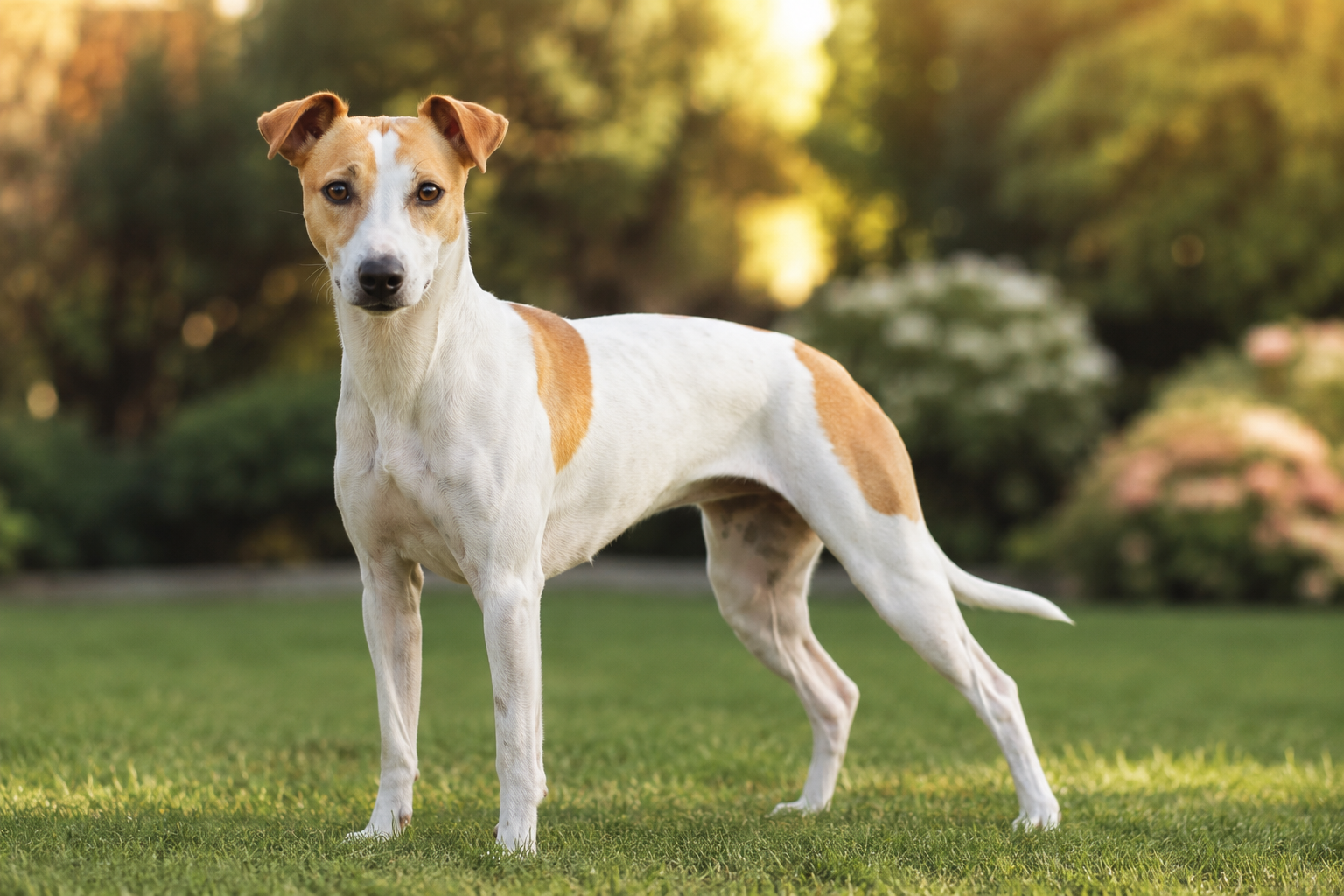
Whippet Jack Russell Mix: A Guide to Training and Care

This post contains affiliate links. This means I will make a commission at no extra cost to you should you click through and make a purchase. Read the full disclosure here.The Whippet Jack Russell mix combines two athletic dogs with very different working backgrounds. The Whippet was developed as a fast sighthound, while the Jack Russell Terrier was bred to pursue quarry and control vermin.
A dog inheriting characteristics from both parents may be fast, intelligent, affectionate and highly alert to movement. This can make the mix an entertaining companion for an active owner—but potentially challenging for someone looking for a quiet, easily controlled dog.
A Whippet Jack Russell mix may also be called a Jackawhip, Whippet Jack or Jack Russell Whippet cross. These are informal names rather than the name of an officially recognised breed.
Because it is a mixed-breed dog, its appearance, size, temperament and health cannot be predicted precisely. This guide explains what prospective and current owners can reasonably expect while recognising that every dog is an individual.
Quick answer: A Whippet Jack Russell mix is likely to be an athletic, intelligent and affectionate dog with considerable speed and a potentially strong prey drive. It generally needs secure exercise, reward-based training, mental stimulation and plenty of companionship.
Whippet Jack Russell Mix at a Glance
| Characteristic | Possible traits |
|---|---|
| Other names | Jackawhip, Whippet Jack, Jack Russell Whippet cross |
| Size | Small to medium |
| Weight | Often approximately 7–16 kg, but may fall outside this range |
| Height | Usually between the parent breeds |
| Coat | Short and smooth, or occasionally broken and slightly wiry |
| Shedding | Low to moderate, but still sheds |
| Temperament | Affectionate, energetic, alert and intelligent |
| Exercise needs | Moderate to high |
| Trainability | Intelligent but potentially distractible |
| Prey drive | Often high |
| Grooming | Generally low maintenance |
| Suitable for first-time owners | Possibly, with preparation and training support |
| Suitable for homes with cats | Depends on the individual dog |
| Recognition | Not recognised as a standardised breed |
These descriptions are general possibilities, not guarantees.
What Is a Whippet Jack Russell Mix?
A Whippet Jack Russell mix is usually produced by crossing a Whippet with a Jack Russell Terrier. However, a rescue dog described by this name may only be suspected of having ancestry from both breeds.
The two parent breeds have different body shapes and working histories.
The Whippet is an elegant, muscular sighthound built for speed. The Royal Kennel Club describes the breed as gentle, affectionate and adaptable in domestic and sporting settings. See the Whippet breed standard.
The Jack Russell is a smaller, sturdier working terrier. It is typically lively, bold, flexible and determined. Jack Russells may have smooth, broken or rough coats, although white usually remains the predominant colour. See the Jack Russell Terrier breed standard.
A puppy can inherit any combination of these characteristics. One Whippet Jack Russell mix may look like a small Whippet with Jack Russell markings, while another may have a stockier body, shorter legs and a terrier-like face.
What Does a Whippet Jack Russell Mix Look Like?
There is no official appearance standard for this cross.
Many have a lean, athletic body with longer legs than the average Jack Russell. Others retain the terrier’s more compact shape. The chest may be relatively deep, and the abdomen may have the visible upward curve commonly associated with sighthounds.
Possible physical characteristics include:
- a narrow or moderately broad head;
- a long or medium-length muzzle;
- folded, rose-shaped, semi-pricked or upright ears;
- a deep chest;
- a slender waist;
- long or moderately short legs;
- a long, tapering tail; and
- a smooth, broken or slightly wiry coat.
The dog’s body should appear balanced and allow comfortable movement. Extremely short legs, severe spinal curvature or exaggerated body proportions should not be considered desirable characteristics.
Size and weight
Most Whippet Jack Russell mixes are likely to be small-to-medium dogs. However, adult size depends on the parents, sex and individual genetics.
A general estimate is:
- Height: approximately 30–48 cm at the shoulder
- Weight: approximately 7–16 kg
Some dogs will be smaller or larger than these estimates. The parents’ actual sizes provide a better guide than an online average.
Coat and Colours
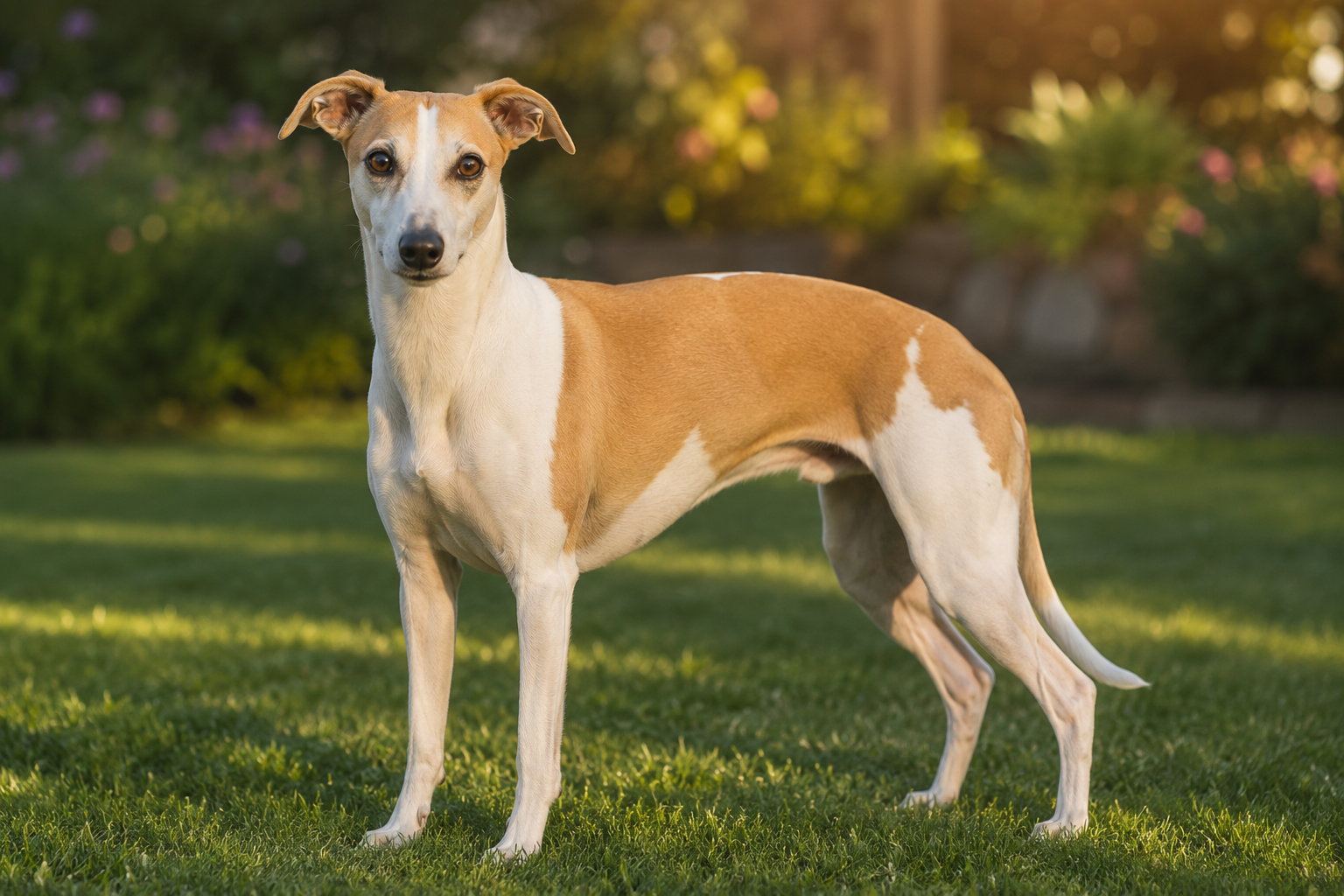
The coat is often short, smooth and close to the body. This is likely when the dog inherits the Whippet’s coat or comes from a smooth-coated Jack Russell parent.
A puppy may also inherit a broken or rougher coat from the Jack Russell side.
Possible colours and patterns include:
- white and tan;
- white and black;
- white, black and tan;
- brindle and white;
- fawn;
- cream;
- black;
- brown;
- brindle; or
- patches and mixed markings.
Whippets occur in many colours, while Jack Russells are normally predominantly white with black, tan or brown markings. The possible range in their offspring is therefore broad.
Coat colour does not reliably predict temperament, health or intelligence. Be cautious of breeders who charge substantially more for a supposedly “rare” colour without prioritising health and temperament.
Whippet Jack Russell Mix Temperament
A Whippet Jack Russell mix may be affectionate and gentle at home but fast, alert and highly stimulated outdoors.
Potential personality traits include:
- strong attachment to family;
- playfulness;
- sensitivity;
- intelligence;
- alertness;
- curiosity;
- independence;
- a desire to chase;
- excitement around movement; and
- difficulty settling when under-exercised.
Whippets are often described as affectionate and even-tempered. Jack Russells are typically more intense and persistent. A mixed dog could inherit the Whippet’s softer sensitivity, the terrier’s confidence or a combination of both.
This dog may respond poorly to shouting or physical punishment. Harsh handling can increase fear, frustration or defensive behaviour without teaching the dog what to do instead.
Are they cuddly?
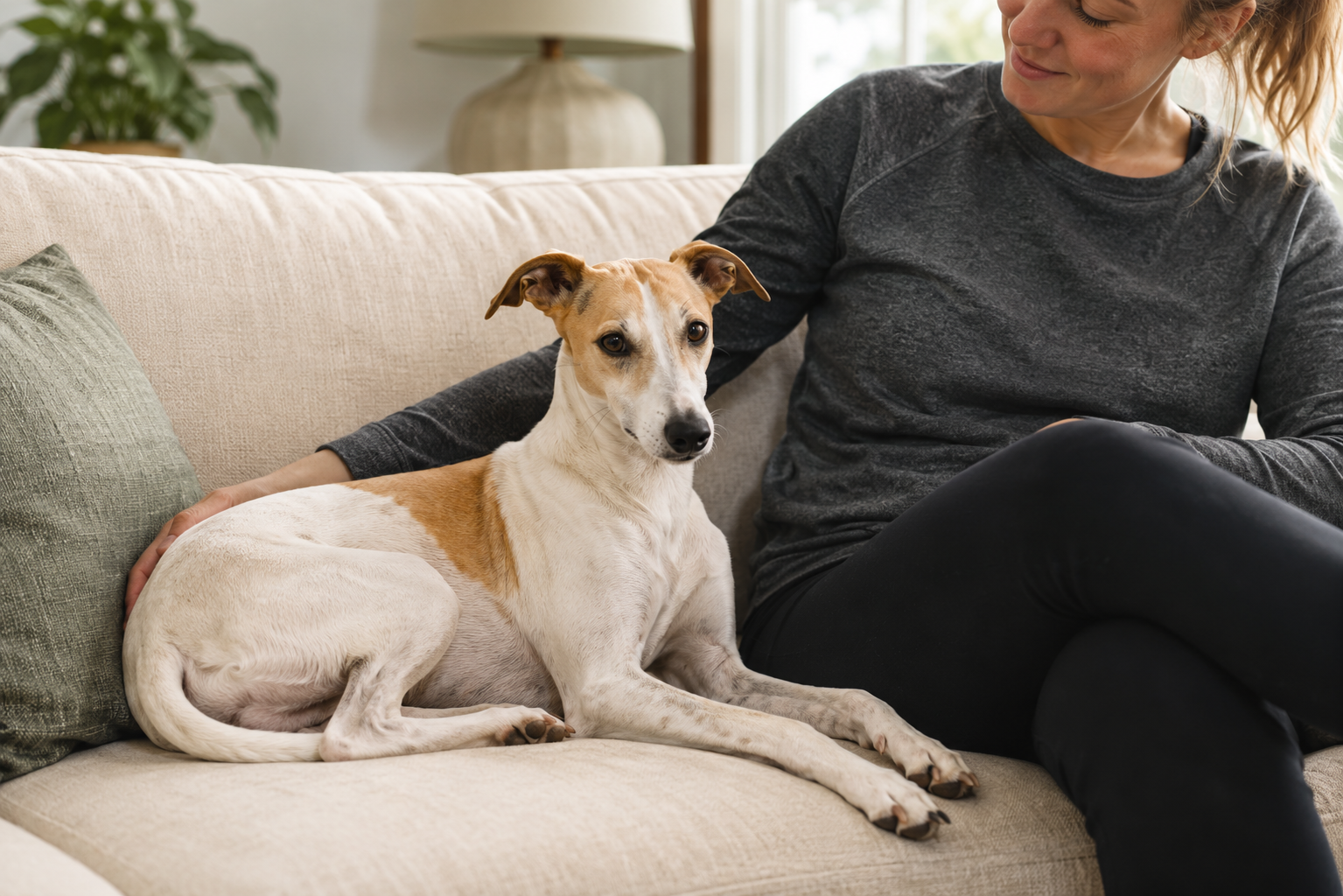
Many Whippets enjoy physical closeness and comfortable sleeping places. Jack Russells can also be very affectionate with their families.
A dog inheriting these traits may enjoy curling up beside its owner after exercise. However, not every dog enjoys being hugged or handled for long periods. Respect signs that the dog wants space, such as turning away, lip licking, stiffening or leaving.
Can they be left alone?
Some can learn to remain alone for reasonable periods, but this should be introduced gradually. A sudden transition from constant company to several hours alone may result in distress, barking or destructive behaviour.
Puppies require regular toilet breaks, feeding, training and supervision. They should not be left alone for a full working day.
Is a Whippet Jack Russell Mix a Good Family Dog?
The mix can be a rewarding family companion when its needs and personality suit the household.
Its advantages may include:
- affectionate behaviour;
- enthusiasm for family activities;
- manageable body size;
- playful energy; and
- willingness to learn.
Possible challenges include:
- chasing children who run;
- becoming overexcited during play;
- jumping up;
- guarding toys or food;
- sensitivity to rough handling; and
- difficulty settling in a noisy home.
Adults must supervise all interactions between children and dogs. Children should learn not to climb on the dog, pull its ears, disturb it while sleeping or take food from its mouth.
A dog should always have a quiet resting place where children are not allowed to follow it.
Can a Whippet Jack Russell Mix Live With Cats?
Some can live safely with cats, but neither the breed name nor puppyhood guarantees compatibility.
Whippets are sighthounds that may chase moving animals. Jack Russells were developed to pursue quarry and can also have a strong prey drive. Combining the breeds may produce a dog that reacts very quickly when a cat runs.
A puppy raised calmly with a confident, dog-experienced cat may learn appropriate behaviour. However, introductions must still be gradual and supervised.
Helpful precautions include:
- keeping the dog on a lead initially;
- using gates to create separate areas;
- giving the cat elevated escape routes;
- rewarding the dog for looking away from the cat;
- preventing chasing from the beginning;
- feeding the animals separately; and
- never forcing them to interact.
Some dogs should not live with cats or small animals. Seek assistance from a qualified reward-based behaviour professional if the dog fixates, stalks, trembles, lunges or cannot disengage from the cat.
Exercise Requirements
This mix is likely to need daily exercise, but exercise should involve more than unrestricted running.
A healthy adult may enjoy:
- brisk walks;
- exploring on a long line;
- scent games;
- controlled running in a secure area;
- hiking;
- retrieving toys;
- short training sessions; and
- appropriate dog sports.
Many adult dogs may need approximately 60–90 minutes of activity per day, divided into two or more sessions. Some will require more, while others may need less because of age, health, body structure or temperament.
The Royal Kennel Club lists up to one hour of daily exercise as a general guide for both Whippets and Jack Russells, but a crossbreed’s actual needs must be assessed individually. Exercise recommendations are starting points rather than strict prescriptions.
A secure area is essential
A Whippet Jack Russell mix may be both extremely fast and strongly motivated to chase. An ordinary unfenced field is not a safe place to test whether the dog will return.
Use:
- a securely fenced exercise area;
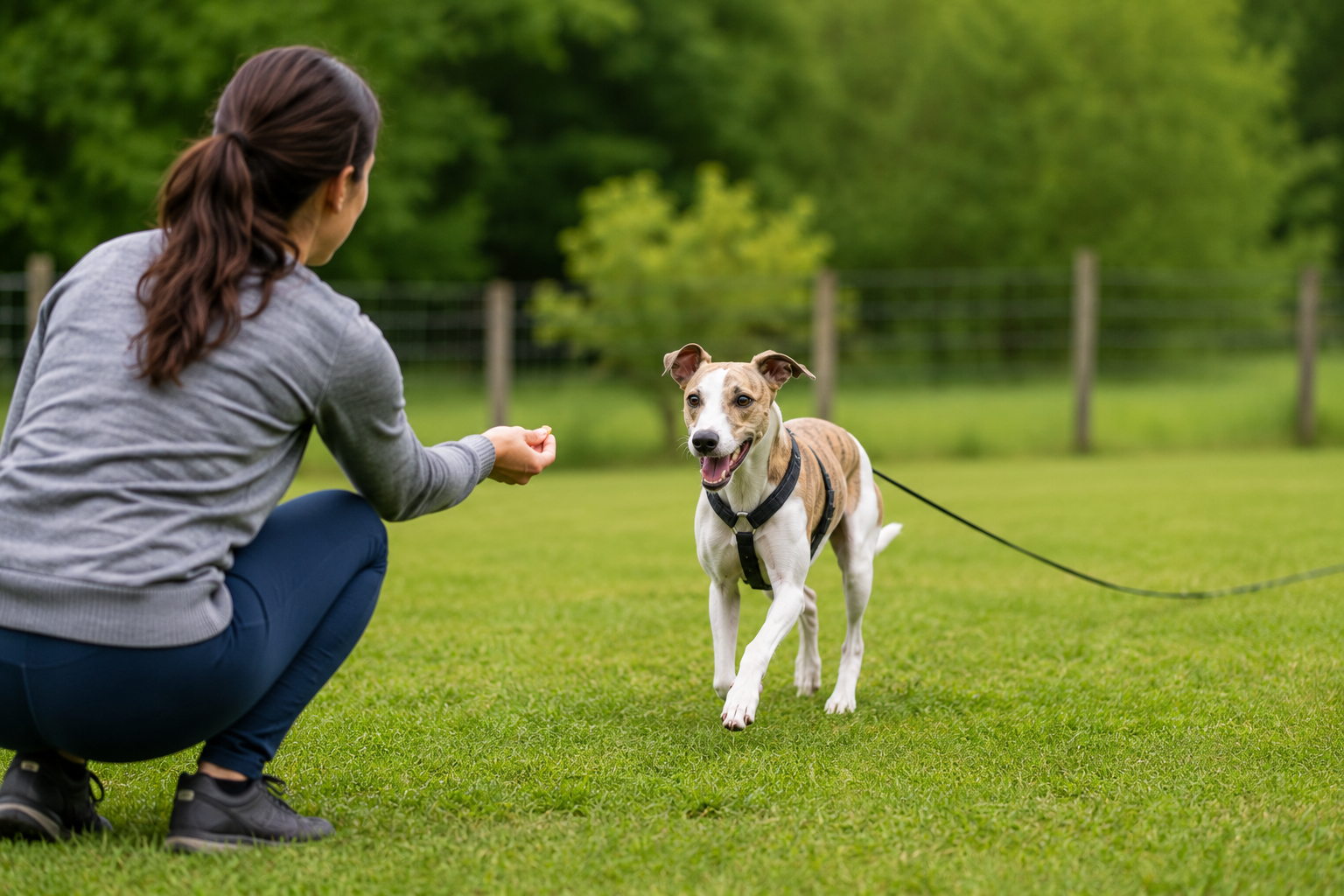
- a well-fitted harness;
- a normal lead near traffic;
- or a long training line attached to a harness.
Retractable leads can be difficult to control when a fast dog accelerates suddenly.
Avoid exercising only to create exhaustion
Constantly increasing physical exercise can produce a fitter dog that still struggles to relax. Combine walks with sniffing, training, food puzzles and scheduled rest.
Mental stimulation often helps reduce boredom more effectively than repeatedly throwing a ball until the dog is exhausted.
Exercise for puppies
Puppies should not be forced to run long distances, accompany adults on repetitive road runs or perform frequent high jumps.
Allow:
- age-appropriate free movement;
- short exploratory walks;
- play on safe surfaces;
- gentle training; and
- plenty of sleep.
Ask your veterinarian when it is appropriate to begin strenuous running or high-impact sports.
How to Train a Whippet Jack Russell Mix
Start training as soon as the dog arrives home. Training should be brief, consistent and rewarding.
The American Veterinary Society of Animal Behavior recommends reward-based methods for dog training and behaviour modification. Aversive methods involving pain, fear or physical discomfort are unnecessary and may damage welfare and trust. Read the AVSAB humane training statement.
Use rewards that matter to your dog, such as:
- small food treats;
- a favourite toy;
- permission to sniff;
- gentle praise;
- play; or
- access to something the dog wants.
1. Begin with name recognition
Say the dog’s name once. When it turns towards you, mark the behaviour with “yes” or a clicker and provide a reward.
Do not repeatedly use the dog’s name while scolding it. You want the name to predict something worth paying attention to.
2. Teach a strong recall
Recall is particularly important for a fast dog with a possible prey drive.
Begin indoors:
- Say the dog’s name and recall cue once.
- Move backwards encouragingly.
- Reward generously when the dog reaches you.
- Release it to continue an enjoyable activity.
Progress to a fenced area and then practise on a long line. Do not allow the dog off lead in an unsecured location merely because recall works at home.
Never punish a dog after it eventually returns. This teaches the dog that reaching you can lead to something unpleasant.
3. Teach loose-lead walking
Reward the dog whenever the lead is loose and it remains close to you. If it reaches the end of the lead, stop or change direction calmly.
Practise first in quiet places. Expecting perfect lead walking beside traffic, dogs and wildlife before building the skill is unrealistic.
4. Train an emergency stop
An emergency stop can provide an additional layer of safety, although it does not replace a lead or secure fence.
Begin at a short distance. Use a clear cue, reward the dog for stopping and gradually practise with mild distractions. A qualified trainer can help you teach this safely.
5. Teach “leave it” and “drop”
These cues are useful when the dog becomes interested in food, rubbish or unsafe objects.
Trade the object for a valuable reward rather than chasing the dog or forcibly opening its mouth. Regular forced removal may encourage running away, swallowing objects or guarding them.
6. Reinforce calm behaviour
Reward the dog for resting quietly on a mat, watching activity without reacting and choosing to disengage from exciting distractions.
Calmness is a skill that can be taught. It is especially valuable for an athletic dog that finds movement exciting.
7. Keep sessions short
Several three-to-five-minute sessions are often more effective than one long session. End while the dog remains interested.
Socialisation
Socialisation means helping a puppy learn to feel safe and behave appropriately around the people, animals, environments and experiences it will encounter.
It does not mean forcing the puppy to greet every person or dog.
Introduce new experiences gradually, including:
- adults of different appearances;
- calm, suitable dogs;
- household sounds;
- traffic at a safe distance;
- veterinary handling;
- grooming tools;
- car travel;
- different walking surfaces; and
- quiet time away from the owner.
Pair new experiences with food, play or distance. If the puppy hides, freezes, attempts to escape or refuses food, the situation may be too intense.
Older rescue dogs also benefit from careful exposure, but owners should work at the dog’s pace.
Preventing Common Behaviour Problems
Chasing
Prevent the dog from rehearsing chasing behaviour. Use fences, leads and long lines while developing attention and recall.
Chasing wildlife is self-rewarding. Every successful chase can make the behaviour more difficult to interrupt in the future.
Digging
Provide an approved digging area, such as a sandpit containing buried toys or treats. Block access to unsafe areas and increase supervised enrichment.
Barking
Identify what triggers the barking. Possible causes include excitement, fear, boredom, frustration, territorial behaviour or separation distress.
Do not simply punish the sound. Reduce exposure to the trigger where possible and reward an alternative behaviour.
Jumping up
Reward the dog when all four paws remain on the ground. Ask visitors to withhold attention while the dog jumps and calmly greet it when it settles.
Destructive chewing
Provide suitable chew items, supervise the dog and prevent access to valuable or dangerous objects. Sudden destructive behaviour can also result from anxiety or insufficient rest, not merely boredom.
Separation problems
Warning signs include:
- persistent barking or howling;
- drooling;
- frantic pacing;
- destruction around exits;
- attempts to escape;
- inability to eat when alone; and
- toileting despite being housetrained.
Separation distress is not disobedience. Consult your veterinarian and a qualified behaviour professional rather than using punishment.
Feeding and Weight Management
Feed a complete and balanced diet appropriate for the dog’s age, body size, activity level and health.
Puppies require food formulated for growth. Adult dogs require an appropriate maintenance diet, while senior or medically affected dogs may need veterinary guidance.
The amount printed on a food package is only a starting point. Monitor the dog’s body condition and adjust portions when necessary.
At a healthy weight:
- the ribs should be easy to feel under a thin layer of tissue;
- the waist should be visible from above; and
- the abdomen should rise behind the ribcage when viewed from the side.
A Whippet-type body is naturally lean, but visible leanness does not always mean the dog is underweight. Conversely, a deep chest and tucked abdomen do not guarantee a healthy body condition. Ask your veterinarian to assess the dog.
Treats should form only a small part of daily calorie intake. Reduce the regular meal slightly when using many treats during training.
Never give supplements, raw diets or homemade diets based only on online advice. Homemade diets should be formulated by a qualified veterinary nutrition professional to avoid nutritional deficiencies.
Grooming a Whippet Jack Russell Mix
Most smooth-coated dogs require relatively simple grooming.
Brushing
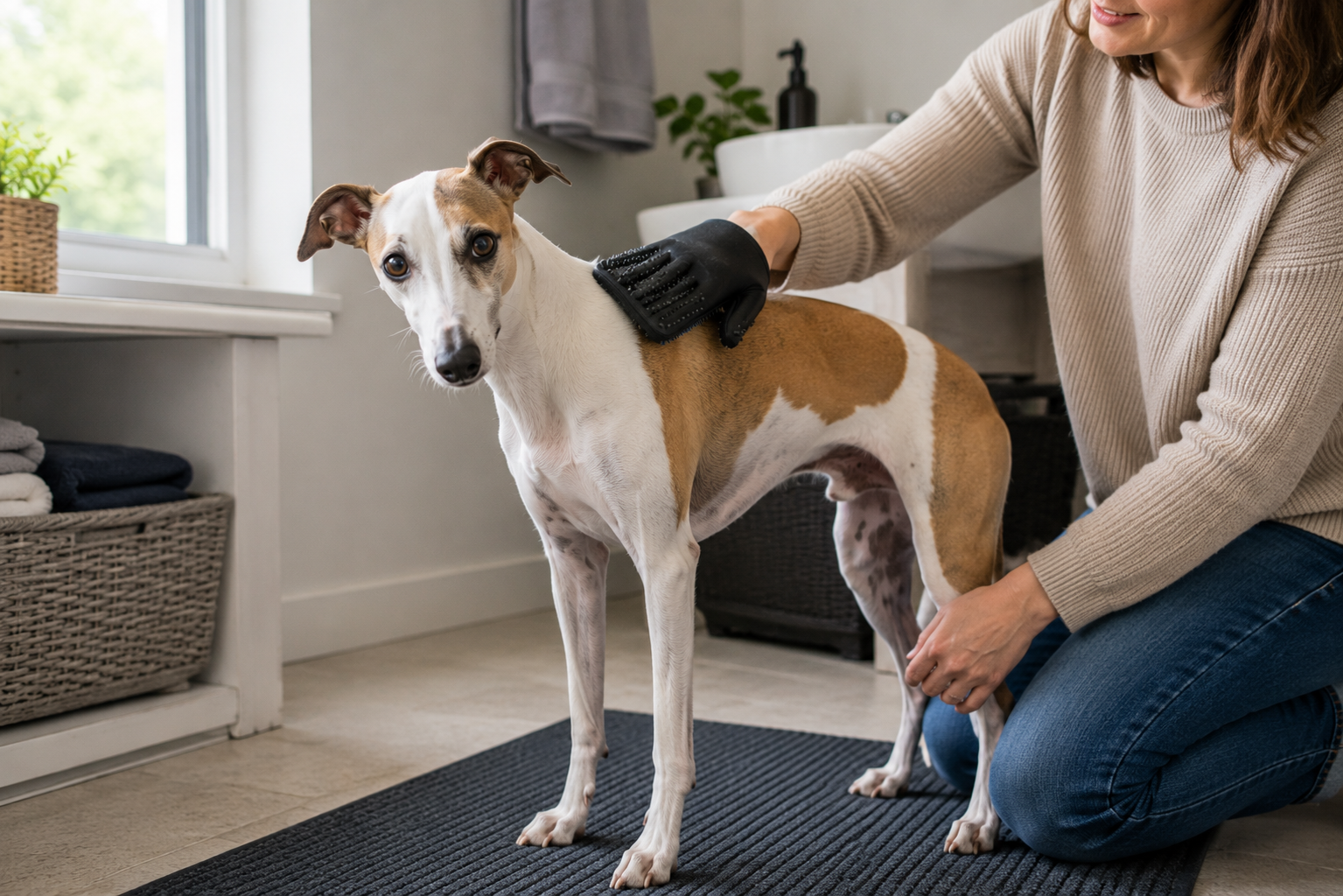
Brush once or twice a week using a soft rubber grooming mitt or suitable short-coat brush. This removes loose hair and allows you to check the skin.
Dogs with a broken or wiry coat may need additional coat care.
Bathing
Bathe when dirty or when advised by your veterinarian. Frequent bathing with unsuitable products can dry or irritate the skin.
Use a dog-specific shampoo and rinse thoroughly.
Nail care
Check the nails regularly. Long nails can affect comfort, grip and movement. Ask a groomer or veterinary professional to demonstrate safe trimming if you are uncertain.
Dental care
Brush the dog’s teeth regularly with dog-safe toothpaste. Human toothpaste may contain ingredients that are unsuitable or dangerous for dogs.
Professional dental treatment may still be needed even when home care is provided.
Ear care
Inspect the ears for redness, swelling, discharge or an unusual odour. Do not insert cotton buds into the ear canal or use an unprescribed treatment.
Repeated head shaking, scratching or discomfort requires veterinary examination.
Cold-weather care
A dog with a lean body and short coat may feel cold easily. A comfortable, properly fitted coat may help during cold or wet walks.
Clothing should allow natural shoulder movement and should not rub under the legs or around the neck.
Potential Health Concerns
A mixed-breed dog is not automatically healthier than its parents. It can inherit health risks from either side of its family.
The World Small Animal Veterinary Association advises that hereditary disease should be considered in pedigree dogs, deliberately produced crosses and other mixed-breed dogs. Health screening remains important regardless of the label given to the puppies. Read the WSAVA health-focused breeding statement.
Potential concerns to discuss with a veterinarian include the following.
Eye conditions
Jack Russells can be affected by inherited eye conditions, including primary lens luxation. Eye pain, redness, cloudiness, sudden squinting or apparent loss of vision requires prompt veterinary attention.
Inherited ataxias
Late-onset ataxia and spinocerebellar ataxia are inherited neurological conditions associated with Jack Russells. Signs can include an unsteady gait, poor coordination, unusual leg movement or difficulty balancing.
The Royal Kennel Club lists DNA tests for primary lens luxation, late-onset ataxia and spinocerebellar ataxia for Jack Russells, together with eye screening recommendations. See Jack Russell health-testing guidance.
Heart disease
Whippets and other dogs can develop congenital or acquired heart conditions. Warning signs may include coughing, fainting, reduced exercise tolerance, unusual breathing or abdominal swelling.
These signs are not specific to heart disease, so veterinary assessment is necessary.
Joint and soft-tissue injuries
An athletic dog can experience muscle strains, ligament injuries, fractures or joint problems. Avoid encouraging a poorly conditioned dog to perform repeated high jumps or abrupt turns.
Sudden lameness, swelling, severe pain or refusal to bear weight requires veterinary attention.
Dental disease
Dental disease can cause pain, infection and difficulty eating. Warning signs include unpleasant breath, inflamed gums, loose teeth, dropping food or chewing on one side.
Skin allergies
Itching, repeated licking, hair loss, inflamed skin or recurring ear trouble may indicate allergies, parasites, infection or another medical problem.
Do not repeatedly change food or apply home treatments without identifying the cause.
Anaesthetic considerations
Whippets have a lean sighthound body type, but owners should not assume that every cross will react unusually to anaesthesia. Modern veterinary anaesthesia should be planned for the individual dog’s health, size and procedure.
Tell your veterinarian about the dog’s known ancestry, previous reactions and medications. Do not avoid necessary dental or surgical care based solely on internet claims about sighthounds.
When to Contact a Veterinarian Urgently
Seek urgent veterinary help if your dog:
- struggles to breathe;
- collapses or loses consciousness;
- experiences a seizure lasting several minutes or repeated seizures;
- develops sudden weakness or loss of coordination;
- has a swollen abdomen with repeated unproductive retching;
- suffers a major injury;
- cannot bear weight after an accident;
- consumes a toxic substance;
- has severe or uncontrolled bleeding;
- repeatedly vomits and cannot keep water down; or
- develops sudden eye pain, cloudiness or apparent blindness.
Do not give human pain medication unless a veterinarian specifically instructs you to do so. Common human medicines can be toxic to dogs.
Choosing a Responsible Breeder
A person producing mixed-breed puppies should meet the same welfare and health standards expected from any responsible breeder.
Ask to see:
- verified health-test results for both parents;
- the mother with the puppies;
- veterinary records;
- the environment in which the puppies are raised;
- evidence of age-appropriate socialisation;
- information about temperament;
- a written contract; and
- a plan for taking back the dog if the home does not work out.
The Jack Russell parent should receive relevant DNA and eye testing. The Whippet parent should receive health examinations and any screening recommended for its family line and country.
Avoid breeders who:
- always have several crosses available;
- will not show health documents;
- use “hybrid vigour” as a substitute for testing;
- sell very young puppies;
- refuse to let buyers see where puppies are raised;
- advertise guaranteed coat, size or temperament;
- breed primarily for rare colours; or
- pressure buyers to pay immediately.
Adopting From a Rescue
A rescue may describe a dog as a Whippet Jack Russell mix based on its appearance and behaviour. Without reliable records or DNA testing, the ancestry may remain uncertain.
This does not prevent the dog from being a wonderful companion.
Ask the rescue about:
- behaviour around dogs, cats and children;
- response to being left alone;
- prey drive;
- recall;
- handling and grooming;
- medical history;
- energy level;
- ability to settle indoors; and
- behaviour observed in a foster home.
An adult rescue dog may offer more predictability because its mature size, coat and established behaviour can already be assessed.

Frequently Asked Questions
Is a Whippet Jack Russell mix a good first dog?
It can be, but the owner must be prepared for speed, prey drive, training and daily exercise. A calm adult dog assessed by a responsible rescue may be easier for a first-time owner than an energetic puppy.
How much exercise does a Whippet Jack Russell mix need?
A healthy adult may need around 60–90 minutes of daily activity, although individual needs vary. Include walking, sniffing, training and secure opportunities to run rather than relying only on intense exercise.
Can a Whippet Jack Russell mix be let off the lead?
Only in a securely enclosed area unless the owner has carefully assessed the dog’s recall and the environment. Even a well-trained dog may react suddenly to wildlife or another fast-moving animal.
Are Whippet Jack Russell mixes aggressive?
Aggression cannot be predicted from the crossbreed’s name. Behaviour is influenced by genetics, health, early experiences, fear, learning and environment. Sudden aggression or a major behavioural change should be discussed with a veterinarian.
Do Whippet Jack Russell mixes bark a lot?
Some may bark when excited, bored, frightened or alerted by movement and sound. Others are relatively quiet. Training and environmental management can help, but barking should be addressed according to its cause.
Do they shed?
Yes. A short coat can still release hair throughout the year. Weekly brushing helps remove loose hair.
Are they hypoallergenic?
No dog can be guaranteed to be hypoallergenic. Allergens occur in skin flakes, saliva and urine as well as hair.
How long do Whippet Jack Russell mixes live?
No reliable lifespan applies to every dog in this cross. Many small-to-medium dogs live well into their teens, but genetics, preventive care, body weight, accidents and illness all influence lifespan.
Are they suitable for apartments?
Possibly. A secure garden is useful but does not replace exercise. Apartment suitability depends on the dog’s barking, ability to settle, toilet schedule and access to safe outdoor activity.
Can they live with other dogs?
Many can, but compatibility depends on social skills and individual personality. Introductions should take place calmly on neutral ground, with food and valuable toys managed carefully at first.
Final Thoughts
The Whippet Jack Russell mix can be a fast, affectionate and intelligent companion. Its combination of sighthound speed and terrier determination may also produce a dog with considerable prey drive and an independent approach to the outside world.
The best home for this mix will provide:
- secure opportunities to exercise;
- reward-based training;
- mental stimulation;
- comfortable rest;
- companionship;
- preventive veterinary care; and
- realistic management around wildlife and smaller animals.
Do not choose the mix based only on its attractive appearance. Spend time with the individual dog, ask about its behaviour and health, and make sure its needs match your daily lifestyle.